Washington Had the Playbook and the Polling. It Passed on Almost None of It
“AI systems that are deployed for high-risk decision making should be subject to enhanced oversight, transparency, and accountability measures to mitigate potential harm.”
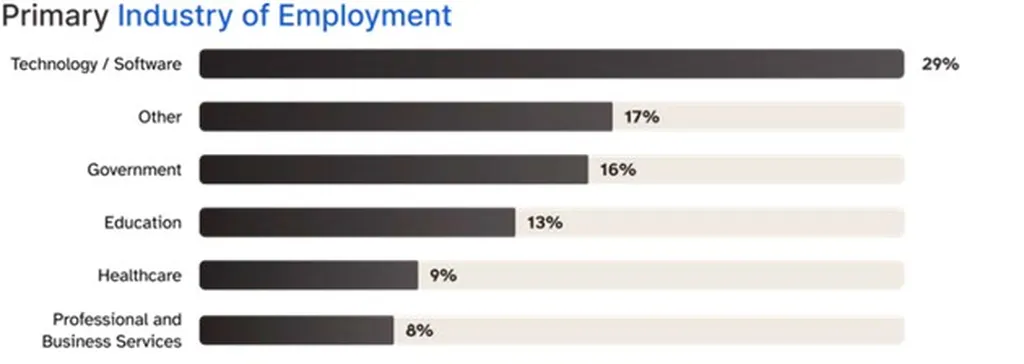
Washington State’s AI Task Force quietly released two reports on July 1st with little fanfare, and as someone who lives here, I spent most of yesterday reading these and double-checking my conclusions. The Task Force Final Report lays out eleven policy recommendations with legislative status tracked for each, while the Labor Survey ran 582 workers through approximately forty-five questions between December 2025 and January 2026. The survey was weighted to reflect state demographics despite skewing toward Puget Sound, higher earners, and white respondents. Read together, they show where politicians drew their red lines and where workers are standing today.
Four recommendations became law while seven went nowhere:
- Regulate Companion AI Chatbots passed in HB 2225
- Healthcare prior authorization transparency landed in SB 5395
- Disclosing law enforcement AI use made it into ESSB 6002 partially
- Removing barriers for enforcing Child Sexual Abuse Materials laws cleared via SB 5105
The remaining proposals all stalled. High-risk AI governance sat in House and Senate committees after initial votes. Training data transparency bills stopped in appropriations. Workplace guidelines got rejected as a striker amendment. And creating an emerging technology advisory body received zero action from the legislature. Notice what passes and what doesn’t, and you’ll see which harms lawmakers care enough to address.
The Task Force had proposed developing guidelines for AI in the workplace that would require multi-stakeholder groups to establish principles, guarantee disclosure when AI affects employment decisions, and ensure humans stay accountable for discipline or termination (the “human in the loop” wallpapering). That recommendation failed its committee hearing at Senate Ways and Means. Meanwhile, the survey found seventy-five percent of all workers reported workplace changes due to AI alone, and almost forty percent mentioned regulation unprompted when asked open-ended questions about their feelings.
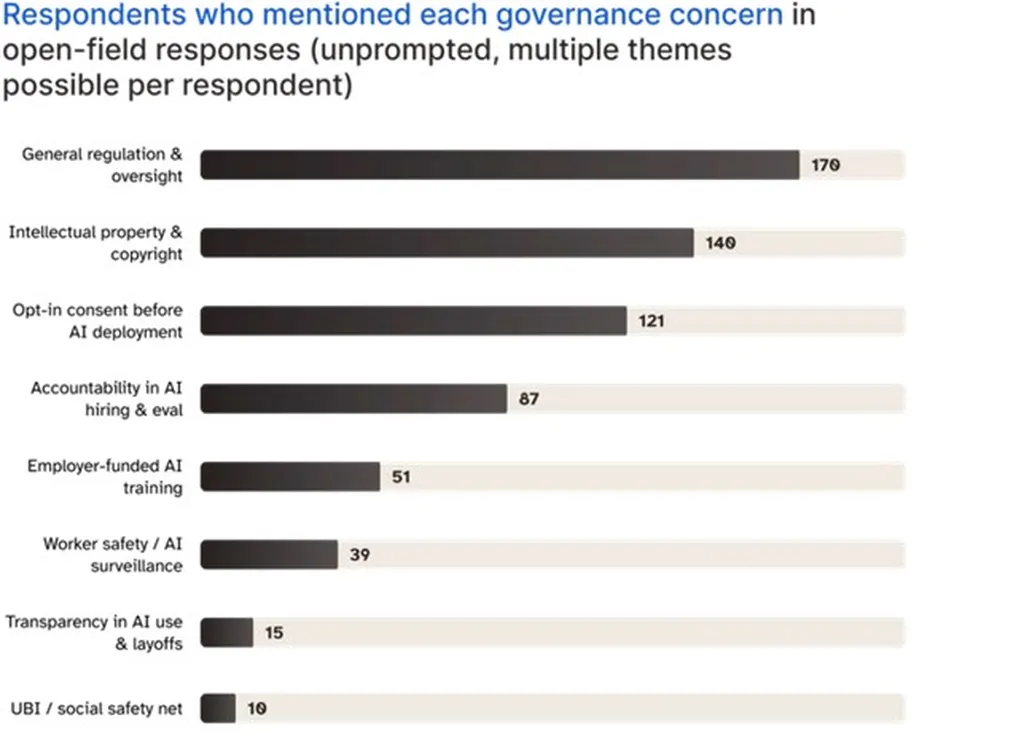
Workers told interviewers explicitly they wanted governance around specific areas:
- Transparency of AI use on the job
- Intellectual property protection
- Training support
- Accountability for AI in hiring decisions
- Opt-in consent before AI deployment
- Worker safety and protection
The disconnect is obvious: policymakers refused to act while workers described feeling surveilled, coerced into using tools that produce garbage (“workslop”) requiring double-time correction (“botsitting”), and forced to train systems replacing them (Meta’s latest surveillance initiatives).
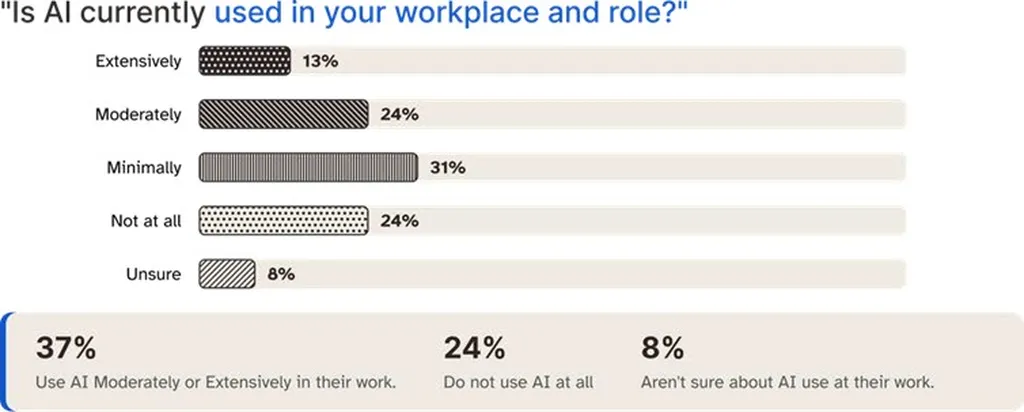
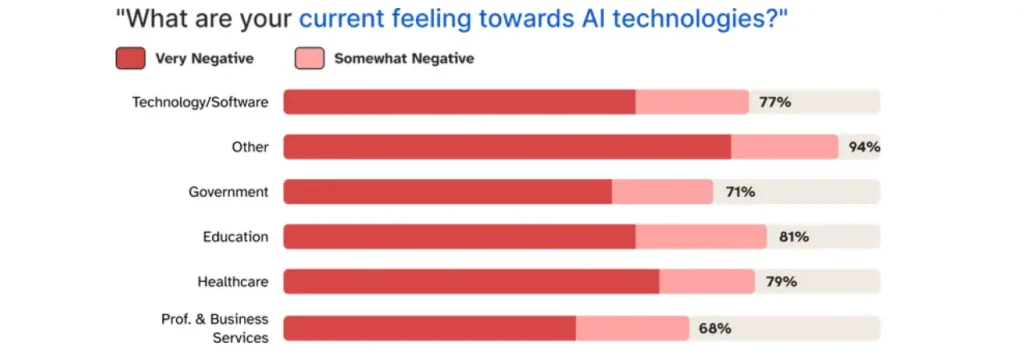
Eighty percent of survey respondents held negative sentiment about AI use in their jobs, a near-universal thumbs-down from people actually using the technology every day. Forty-two percent of all workers, 246 out of 582, reported spending time fixing AI hallucinations, cleaning up miscommunications, or verifying output (more botsitting). One respondent described mandated hours per week using LLMs, then easily spending twice that fixing mistakes in the output. Positive sentiment existed but clustered narrowly among workers directly building or training AI systems, the people whose salaries and stock options depend on the stuff working. Everyone else got productivity losses dressed up as efficiency gains, something that Wall Street seems to be getting skeptical of.
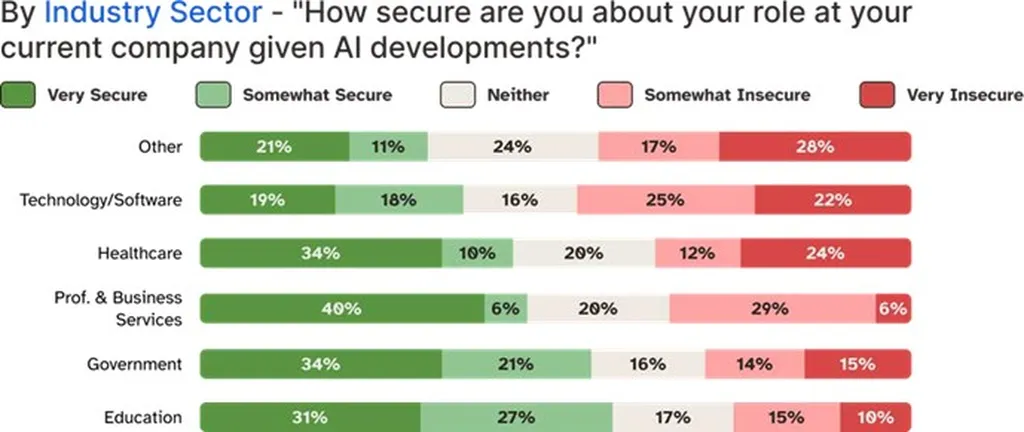
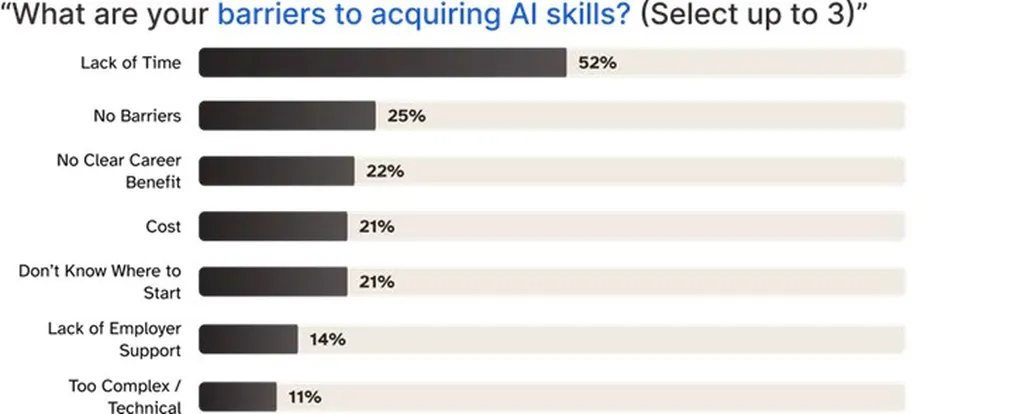
On education funding, the Task Force recommended investments in K-12 STEM, educator professional development, infrastructure updates, and higher-ed AI programs, acknowledging existing gaps without mandating state curriculum. The survey confirms this gap already exists among current adults: fifty-two percent lack time for training, twenty-one percent don’t know where to start, and ninety-one percent of workers earning under fifty thousand dollars hold very negative feelings toward AI. Lower-wage workers face sixty-four percent job insecurity versus the forty-three percent average, but only thirty percent have employer support for upskilling. The Task Force spoke about future preparation while survey respondents lived the current consequences of no preparation, because workers earning under fifty thousand are self-employed or holding multiple part-time jobs with zero institutional backup.
There’s a hidden career pipeline argument that appears exclusively in the survey data, absent from the Task Force’s report entirely. Mid-career employees with six to fifteen years experience report sixty-two percent seeing reduced intern hiring, eliminated junior roles, and depressed entry-level wages. Recently displaced early-career workers show sixty-three percent blaming AI for job loss, and one tech-sector respondent wrote plainly that young people cannot break into engineering because the junior positions have vanished. College students avoid computer science degrees assuming graduates will find no openings. The legislature declined workplace guidelines protecting current workers, and nobody even started talking about preserving the pipeline feeding those workplaces tomorrow.
The Task Force explicitly carved out operational areas from disclosure requirements, arguing businesses should deploy AI freely in contexts like inventory management, logistics coordination, and customer service automation without notifying anyone. But the survey shows workers calling exactly these operational deployments sources of harm:
- Fourteen percent reported mandatory meeting recording tools that depersonalized interactions
- IT departments replaced by AI agents unable to provide anything beyond basic document references left teams frustrated
- Productivity fell because mandated coding assistance required twice the time reviewing inaccuracies
Policy created an exemption zone for operational AI, and the exemption zone contains worker complaints.
Washington’s chosen narrow interventions over structural reform. Consumer-facing harms like chatbots and healthcare denials triggered legislation because victims were identifiable and existing legal frameworks could extend coverage. Workplace AI, training data transparency, and systemic governance hit private sector operations harder and would have required new regulatory architecture, so those proposals stalled. Now workers are trying to operate inside whatever rules exist, while building skills individually on evenings and weekends and hoping their jobs don’t disappear. Legislators can claim they acted on four fronts, but workers will keep wondering why nobody listened to what they were asking for.