The High Cost of Consolidating Education on a Single Vendor
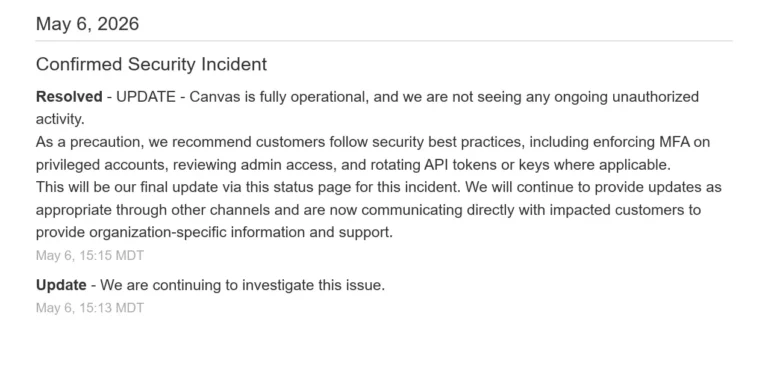
Key quote:
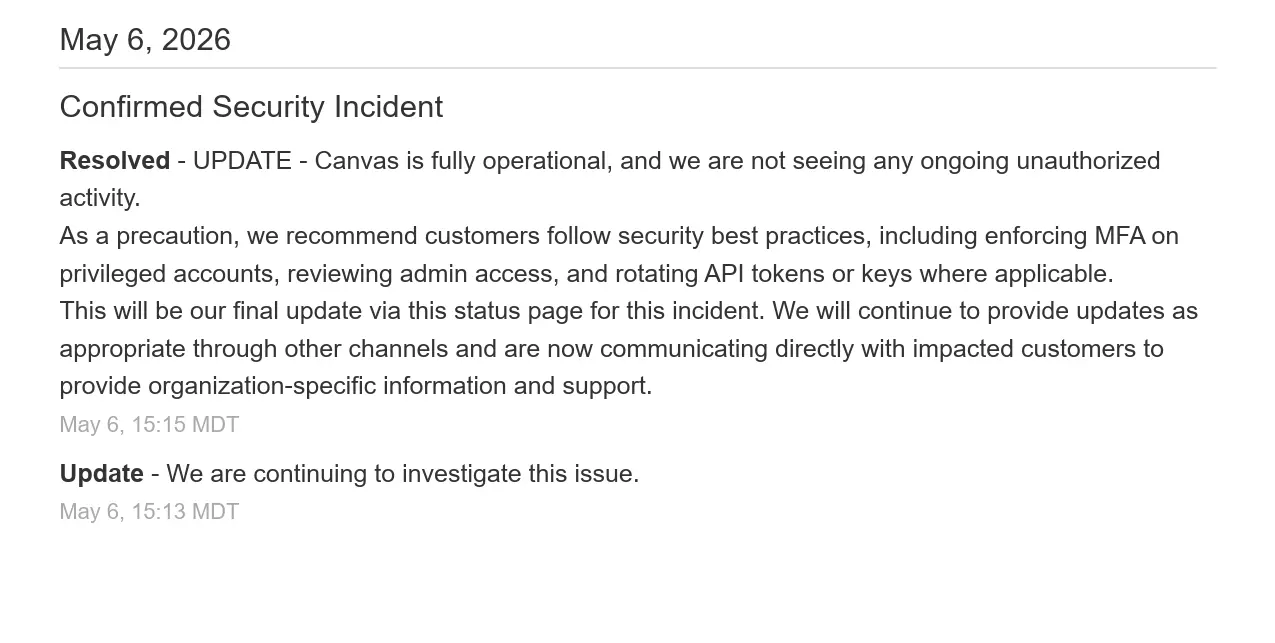
“Update – Canvas is now available for most users. Canvas Beta and Canvas Test remain in maintenance.”
Why it matters:
The May 2026 disruption of Canvas isn’t unique. It’s the predictable result of the underlying economics of an education sector that’s prioritized convenience over risk management. By consolidating the operations of thousands of institutions onto a single platform, schools have created a single point of failure that ShinyHunters exploited to claim access to hundreds of millions of student records. This is like the 2020 Blackbaud breach, which later led to a $49.5 million multistate settlement announced in 2023 and an FTC order finalized in 2024 following allegations of weak security and misleading statements about the breach. We’re already seeing the legal machinery start, with firms launching investigations into Instructure, much like the ongoing Multi-District Litigation against PowerSchool that involved more than 60 million student records.
The economics of modern education drive schools toward these monolithic vendors, and the business risks remain unaddressed. When Instructure said on May 2 that it believed the incident had been contained, and Canvas later faced defaced login pages on May 7, it reveals the challenges of trusting a single vendor with the entire academic lifecycle. The fallout extends beyond downtime; it invites regulatory scrutiny. California secured a $6.75 million settlement against Blackbaud for deceptive disclosures. Instructure may face similar exposure for its handling of the “Free-For-Teacher” account vulnerability.
Schools (and everyone else) need to stop treating vendor contracts as mere procurement checklists and start treating them with risk assessments. The lesson from Blackbaud, PowerSchool, and now Canvas is clear: when a vendor fails, the institution fails with it. Administrators need to audit their third-party dependencies and define their risk tolerances before the next extortion demand arrives. Waiting for the next breach to force a change in strategy isn’t something the education sector, parents, or students can afford. The path forward requires diversification and rigorous oversight, not just a return to “scheduled maintenance” status.